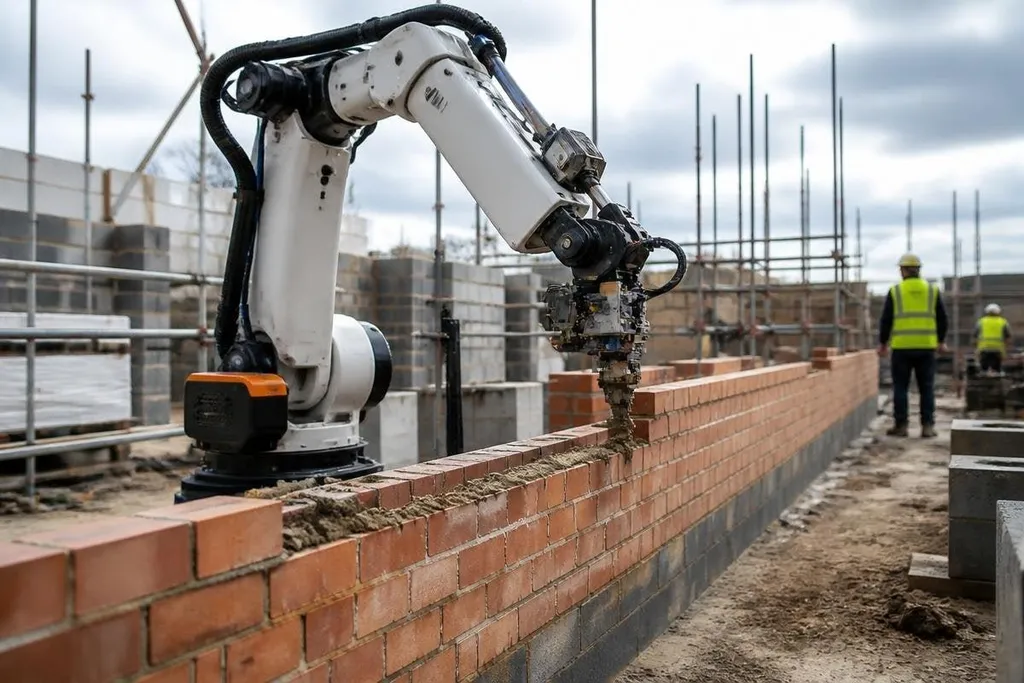
Bricklaying robots are moving from trade-show demonstrations into a harder test: placing units on live building sites. The available material for this article contains no company name, date, price, test result, or deployment record, so it cannot prove how fast that shift is happening.
That limit matters to anyone pricing a masonry job. A robot that places bricks in a controlled video may still need a level surface, steady material supply, trained staff, and a work plan that fits the site.
- A video shows a task, not a full building project.
- A useful report needs output, setup time, labor needs, and site limits.
- The first buying question is where the robot has worked, not how polished the demo looks.
What a bricklaying robot has to do
A bricklaying system must pick up a brick, move it to the planned position, and place it with the correct direction and spacing. If mortar is part of the process, the system also needs a way to apply it at a steady rate.
Those steps sound narrow because they are. The work becomes harder when walls change height, corners appear, materials vary, or another crew moves through the same area. A report should explain which steps the robot handles and which ones remain with people.
The control system matters too. A robot may use cameras, LiDAR, or another sensor to locate the wall and check its position. That does not prove the system can work across every site. It shows only what the named test measured.
For a construction manager, the useful output is not a smooth arm movement. It is the number of bricks placed during a work period, the number of stops, and the time needed to move or reset the system.
The figures that decide the job
A bricklaying robot earns attention only when its work can be compared with the job around it. Reports should name the brick size, wall type, work period, and number of people supporting the system.
Before a manager prices a bricklaying robot, the record should name the wall, brick size, site, work period, and people on hand. A report from Robot24 can put those details beside the machine’s claimed output, so the price is tied to work a crew could actually compare.
The cost needs the same care. A purchase price may leave out transport, site setup, operator training, maintenance, software fees, and changes to the work area. Without those figures, a manager cannot compare the robot with a normal crew or with a different form of automation.
A strong report also names the task the robot could not complete. A system that places straight wall sections may still need people for corners, openings, cleanup, material handling, and inspection. Those limits affect the size and skill mix of the crew.
Why demonstrations can mislead
A demonstration removes many problems found on a building site. The wall may already be prepared. Bricks may arrive in a fixed order. The camera may show the successful run while leaving setup, pauses, and failed placements outside the frame.
That does not make a demonstration useless. It gives a starting point for questions about repeatability, safety, and work rate. The missing details decide how much weight the result deserves.
A buyer should also ask who owns the risk when the system places a brick incorrectly. The answer may affect inspection rules, rework costs, insurance, and the role of a qualified site supervisor.
I’d wait for repeated site records before treating a bricklaying robot as a replacement for a masonry crew. The better near-term case may be a system that handles a narrow, repeatable part of the job while skilled workers manage layout, exceptions, and checks.
A practical check before a purchase
Use these questions when a supplier presents a demo or proposal:
- Named site: Where did the system work, and who recorded the result?
- Measured output: How many bricks did it place during a stated work period?
- Crew needs: How many people loaded material, watched the system, and fixed errors?
- Site limits: Which wall shapes, heights, surfaces, and weather conditions were tested?
- Full cost: What do transport, setup, training, service, and software add to the quoted price?
- Unproven work: Which parts of the build still need manual labor?
Those answers turn a robot story into a work decision. They also show why a rise in demonstrations does not, by itself, prove a rise in useful construction output.
The next useful evidence is simple: a named site, a dated work record, a full crew count, and a cost that includes setup. Until those details are published, bricklaying robots remain a technology to assess task by task, not a finished answer for the building site.